 Gondola Rides in Venice
Best Time of Year for a Gondola Ride in Venice: Month-by-Month Guide
Last reviewed September 2026
The best time for a gondola ride in Venice is October through April, in the morning, when canal traffic is thin and the daytime fare covers the same golden-hour light that costs more after dark in summer. The eleven gondola rides in Venice we compare all sell the same thirty minutes, so the day you pick changes more than the listing does. May through September is the runner-up window: warmer, busier, and worth booking a morning slot to dodge the crowds. Avoid the last two weeks of July if crowds bother you, when the Redentore weekend and peak summer heat overlap on the water at once. Everything below works through why, month by month, with the one fact almost nobody mentions: what time of year you go changes what the ride actually costs.
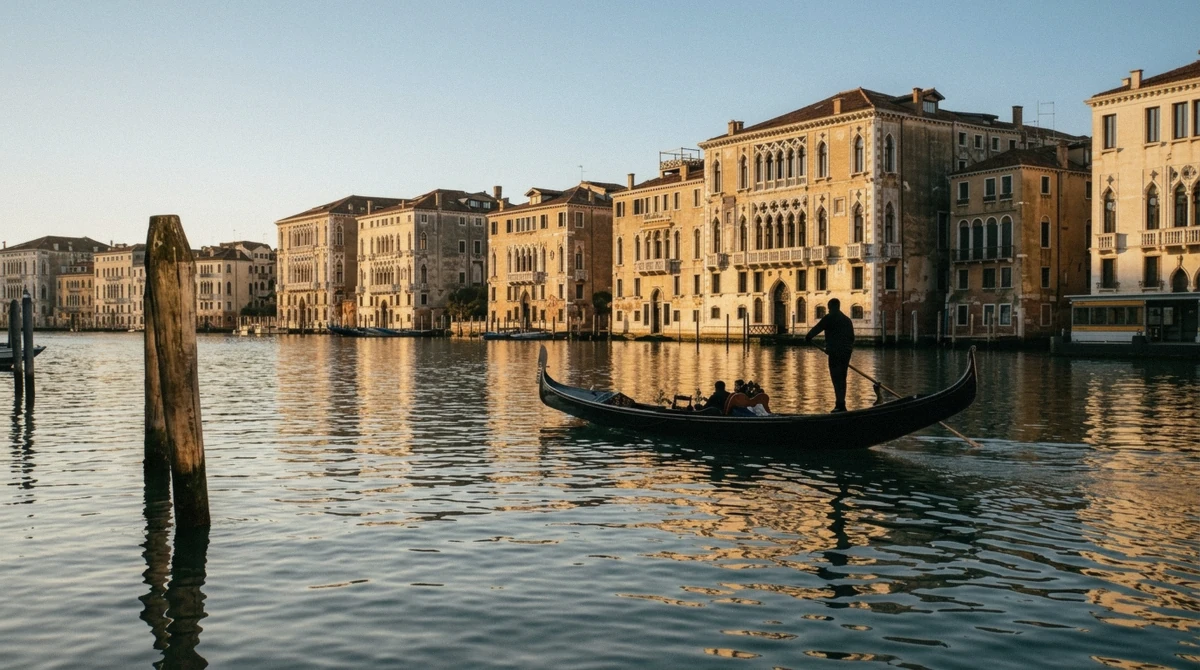
Quick answer October to April mornings for value and light, May to September for warmth, avoid late July crowds
October through April is the best window for a gondola ride in Venice: canals are calmer, and because sunset falls before 19:00 in those months, the best light of the day sits inside the cheaper EUR 90 daytime fare rather than the EUR 110 night rate. May through September is the warmer runner-up, at the cost of more boat traffic and, from April on, a sunset ride billed at the night rate.
Key takeaways
- Best window: October to April, when sunset falls before 19:00 and the golden hour costs the daytime fare, not the night one
- Runner-up: May to September, warmer and longer days, but a sunset ride after 19:00 is charged at EUR 110 instead of EUR 90
- Avoid: the last two weeks of July, when the Redentore weekend and peak summer heat both land on the canals at once
- Counterintuitive fact: rain rarely stops a gondola; wind and exceptional high tide are the real cancellation triggers
- Best time of day: morning, before boat traffic builds near San Marco: detail in Best Time of Day
- Acqua alta season runs 15 September to 30 April by the city's own definition, a window worth knowing about, not fearing
Seasons at a Glance
Two tables, read together: the first tracks conditions and crowd levels month by month, the second gives the real temperatures and rainfall behind them. Figures are ERA5 reanalysis climate averages for Venice, 1996 to 2025, via Open-Meteo, and every number is typical for the month rather than a forecast for any single day.
Month-by-month verdict
Read the Verdict column as the short answer for that month; the Weather and Crowds columns explain why. Two rows carry the same verdict only where they are genuinely tied and adjacent.
| Month | Water & Light | Weather | Crowds | Verdict |
|---|---|---|---|---|
| January | Still, low winter light | Cold, occasional fog | Low | Good value, cold |
| February | Still water, crisp light | Cold, Carnival crowds late month | Moderate (Carnival) | Good, if Carnival dates avoided |
| March | Clearing light, breezier | Mild, rising rain days | Low to moderate | Good overall |
| April | Long golden hour begins | Mild, wetter month | Moderate | Good, book morning slots |
| May | Long evenings, sunset after 19:00 | Warm, wettest spring month | Moderate to high | Good, evenings cost more |
| June | Bright, long days | Hot, humid | High | Good, hot by midday |
| July | Bright, harsh midday light | Hottest month | High, peak (Redentore) | Avoid late July |
| August | Bright, hazy midday | Hottest, most humid | High | Good mornings, hot midday |
| September | Softening light, sunset near 19:00 | Warm, wettest month | High early, easing later | Best overall |
| October | Rich autumn light | Mild, wet | Moderate | Best overall |
| November | Early sunset, moody light | Cool, wettest autumn month | Low to moderate | Good value, acqua alta risk |
| December | Short days, early sunset | Cold | Low, except holidays | Good value, cold |
Temperatures and rainfall
Typical highs, lows and monthly rainfall for Venice, in Celsius with the Fahrenheit equivalent alongside. August is the hottest month at an average high of 27.6 degrees Celsius, January the coldest at 7.3 degrees, and November the wettest at roughly 126 millimetres of rain across about eleven wet days. Figures are ERA5 reanalysis averages for 1996 to 2025 via the Comune di Venezia's tide and weather pages and Open-Meteo; check the current forecast close to your dates.
| Month | Avg high °C (°F) | Avg low °C (°F) | Rain mm |
|---|---|---|---|
| January | 7.3 (45) | 1.5 (34) | 65 |
| February | 9.0 (48) | 2.3 (36) | 65 |
| March | 12.5 (55) | 5.1 (41) | 73 |
| April | 16.4 (62) | 9.0 (48) | 83 |
| May | 20.9 (70) | 13.6 (56) | 103 |
| June | 25.4 (78) | 18.1 (65) | 70 |
| July | 27.5 (82) | 20.1 (68) | 67 |
| August | 27.6 (82) | 20.2 (68) | 84 |
| September | 23.0 (73) | 16.2 (61) | 119 |
| October | 18.2 (65) | 12.1 (54) | 112 |
| November | 12.6 (55) | 7.1 (45) | 126 |
| December | 8.2 (47) | 2.6 (37) | 75 |
Best Season by Traveller Type
If You're a photographer chasing the best light
October or April, for the low-angle golden hour and clearer air than the hazy August midday.
If You're travelling with kids
May or September, for warm but not scorching days and shorter waits than peak July or August.
If You're a first-timer wanting the safest bet
October, the most forgiving month: mild, calmer canals, and a low chance of the ride being shortened by weather.
If You want the calmest water and the fewest other boats
January or February on weekdays, outside the Carnival dates, when canal traffic is at its lowest all year.
If You're on a budget and still want good conditions
November, cheaper across the board and still mild, with the trade-off of the highest average rainfall of the year.
Spring (March to May): Clearing Light, Rising Crowds
Spring opens the calmer window and closes it by the end of May.
What spring actually delivers
March runs mild at a 12.5-degree average high with the lowest crowds of the season; by May, highs reach 20.9 degrees and evenings run long enough that a late-afternoon ride can tip into the night rate once sunset passes 19:00 in the second half of the month. Rain is the spring trade-off, rising toward May's 103mm, the wettest month of the season.
- Temperatures: 12.5°C in March rising to 20.9°C by May
- Crowds: low in March, moderate to high by late May
- Price signal: daytime fare covers the light all month; only late-May evening slots risk the night rate
- Booking lead time: a few days ahead is enough outside the last week of May
The honest trade-off
Spring's best trick, long warm evenings, is also its cost trap once the season tips past mid-May and sunset moves past 19:00. A morning ride on the Grand Canal gondola with app commentary sidesteps that entirely and runs daily through the season.
Summer (June to August): Long Days, Peak Heat
Summer is Venice at its busiest and its most expensive to ride late.
What summer actually delivers
June through August run the year's hottest stretch, peaking at 27.6°C in August, with humidity that makes the open-basin crossings near Danieli and Molo genuinely uncomfortable at midday. Every evening ride after 19:00 falls squarely in the EUR 110 night rate all summer, since sunset does not fall before 19:00 again until late September.
- Temperatures: 25.4°C in June to 27.6°C in August
- Crowds: high all summer, peaking around the Redentore weekend in late July
- Price signal: every sunset ride is charged at the EUR 110 night rate the entire season
- Booking lead time: a week or more ahead for private boats in July and August
The honest trade-off
Summer buys the longest days and the busiest water in the same breath. A morning slot is doing real work here, not just a nicety: by midday the moorings near San Marco genuinely queue. The romantic private ride under the Bridge of Sighs is worth booking a week ahead in this window precisely because private boats run on a single date rather than a rolling schedule.
Autumn (September to November): The Best Overall Window
Autumn is where the light, the crowds and the fare line up best.
What autumn actually delivers
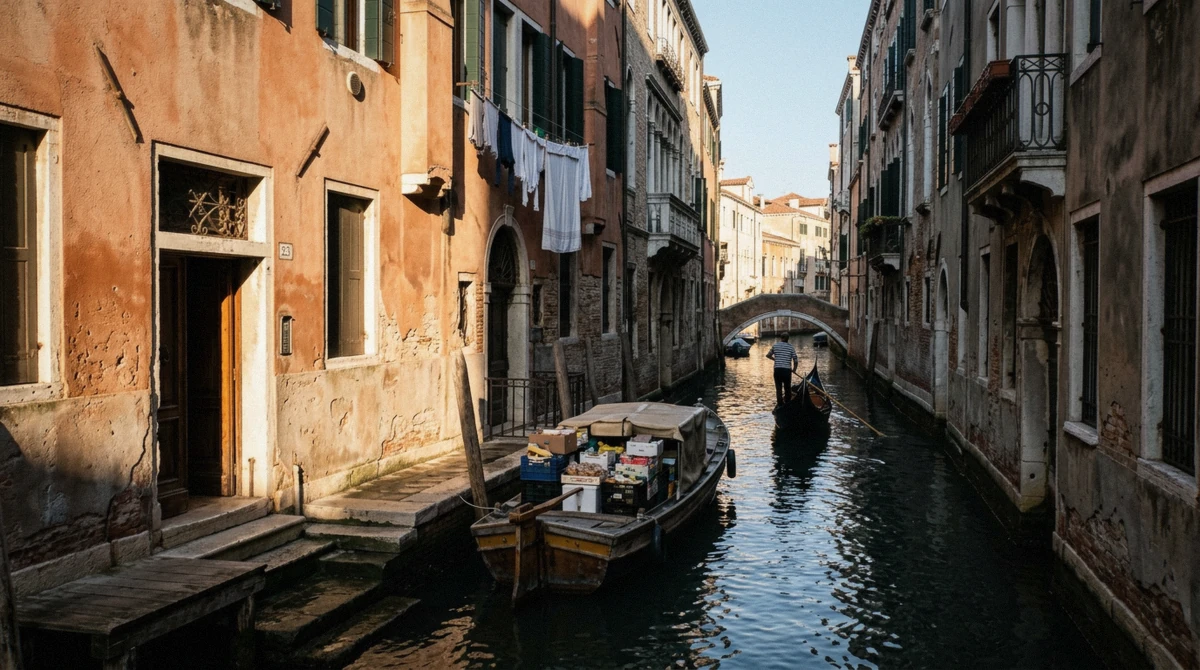
September still runs warm at 23°C but is the wettest month of the year at 119mm; October settles to a mild 18.2°C with rich, low-angle light; by mid-November sunset falls at 16:41, well before 19:00, so the entire visible day sits inside the cheaper daytime fare. Crowds ease meaningfully after the Regata Storica on the first Sunday of September.
- Temperatures: 23.0°C in September down to 12.6°C in November
- Crowds: high early September, moderate by October, low by late November
- Price signal: from late September on, sunset falls before 19:00 and the golden hour costs the daytime fare
- Booking lead time: a few days ahead is enough outside the Regata Storica weekend
The honest trade-off
Rain rises through the season, peaking in September and November. The acqua alta walkway service also begins on 15 September, a sign the city itself treats this as the start of the high-water window: covered in full below, and it rarely amounts to more than an inconvenience for a thirty-minute ride.
Winter (December to February): The Cheapest, Calmest Water
Winter is the season most visitors skip, and the one with the least competition for a good boat.
What winter actually delivers
December through February average 7.3°C to 9.0°C, cold enough on the water to need a real coat, but the canals are at their calmest all year. Sunset falls before 17:00 the entire season, so every ride, day or night, is short daylight rather than a golden-hour chase, and every evening slot before 19:00 still sits inside the daytime fare.
- Temperatures: 7.3°C in January to 9.0°C in February
- Crowds: the lowest of the year, except Carnival dates in February
- Price signal: daytime fare covers effectively the whole afternoon, since sunset falls well before 19:00
- Booking lead time: same-day or next-day booking is realistic outside Carnival
The honest trade-off
Cold is the real cost of winter, on water, which reads colder than the same air temperature on land. Acqua alta risk is also at its statistical highest in this window, covered in full below: pack for it rather than avoid the season because of it.
What Actually Affects Conditions
Most people assume rain ruins a gondola ride. It doesn't.
Rain isn't the trigger, tide and wind are
Gondolas run in the rain; every listing compared on this site states so plainly. What genuinely shortens or cancels a ride is exceptional high tide, when water levels rise enough to affect mooring access and low bridges, and wind on the open-basin crossings near Danieli, Molo and Dogana, where a gondola sits low and exposed. A wet but calm day is a normal gondola day.
A dry but windy one is more likely to cause a problem.
Best Time of Day
Morning has a real, structural advantage here: not just a preference, a fare and a traffic pattern that both favour it.
Morning, and the 19:00 fare step
The city's daytime fare runs 09:00 to 19:00 at EUR 90 for thirty minutes, the same half hour every one of the eleven Venice gondola rides compared on this site sells; the night rate takes over sharply at 19:00 and buys EUR 110 for 35 minutes instead. Booking at 18:30 rather than 19:15 keeps the ride inside the cheaper daytime fare and saves EUR 20 for five fewer minutes on the water: a real, avoidable cost most visitors never notice. Whether that 19:00 line lands before or after sunset depends entirely on the month.
| Month | Sunset (15th) | Sunset vs 19:00 fare step | Golden-hour ride costs |
|---|---|---|---|
| January | 16:53 | Before | EUR 90 daytime fare |
| April | 19:56 | After | EUR 110 night fare |
| June | 21:01 | After | EUR 110 night fare |
| September | 19:23 | After (barely) | EUR 110 night fare |
| October | 18:26 | Before | EUR 90 daytime fare |
| December | 16:28 | Before | EUR 90 daytime fare |
The rule in one sentence
From April to September, sunset falls after 19:00, so a sunset gondola ride is billed at the EUR 110 night rate; from October to March, sunset falls before 19:00, and the golden hour sits inside the cheaper EUR 90 fare. Outside the fare question, mornings also simply have less boat traffic near San Marco, which matters as much for the ride's smoothness as for its price. The Grand Canal gondola with app commentary runs morning departures daily and is the easiest way to act on this.
Crowds and Prices Through the Year
Three named dates matter more than any general seasonal rule.
The dates worth planning around
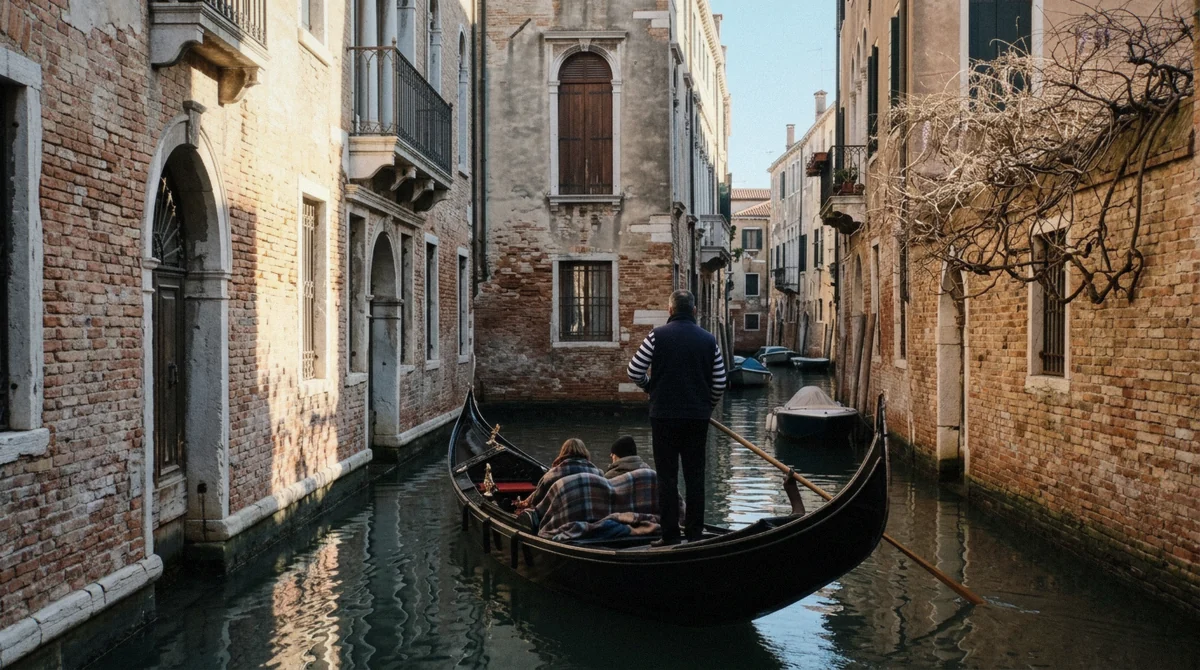
Carnival, movable and usually in February, fills both the canals and the costume crowds around San Marco. The Redentore weekend, the third weekend of July, brings fireworks and boat traffic that make daytime rides near the Bacino noticeably busier. The Regata Storica, the first Sunday of September, closes parts of the Grand Canal to normal traffic for the race itself, worth checking against your date directly.
Outside these three windows, the wider seasonal pattern in the tables above is the more reliable guide than any single week.
A separate cost to check
Venice's day-tripper access fee is a different charge from the gondola fare entirely, applied only on specific dates between April and July in recent years and not charged since late July 2026 with no dates announced for the following year: check the cost page and the city's own page before assuming it applies to your date.
What If the Weather Turns?
A short answer here; the full mechanics live elsewhere.
The summary
Light rain changes nothing; gondolas run in it. Exceptional high tide or strong wind on the open basin is what actually shortens or cancels a ride, and every listing compared here refunds a cancelled booking. If your slot falls in the acqua alta window, keep a spare morning free rather than building your only chance around one fixed time.
For the full scenario table, the siren codes and what to do if you hear one, see what actually happens if your tour is cancelled for weather.
What Acqua Alta Season Removes
This is the one seasonal fact most gondola guides skip entirely, and it is worth planning around rather than fearing.
The city's own definition of the season
The Comune's Centro Maree runs a raised-walkway (passerelle) service for high water from 15 September to 30 April, and suspends it from 1 May: the city's own definition of when acqua alta is expected enough to prepare for. That is a seven-and-a-half-month window, which tells you plainly it is a normal seasonal feature of Venice rather than a rare disaster. Real-time tide readings are published on that same page and via the Telegram channel @centromareevenezia_bot if you want to check conditions close to your date.
So, When Should You Go?
The restated verdict
October through April, in the morning, is the best window: calmer canals, and the golden hour sits inside the cheaper daytime fare because sunset falls before 19:00 all season. November is the budget-conscious runner-up if you don't mind the year's highest rainfall. The one month to avoid, if crowds bother you, is the last two weeks of July, when peak summer heat and the Redentore weekend land on the water together.
Whatever the season, every gondola ride in Venice compared here shows real availability for the dates you actually have.
Best Time for a Gondola Ride: Common Questions
What is the best month for a gondola ride in Venice?
October, for mild temperatures, thinner crowds and light that sits inside the cheaper daytime fare, since sunset falls before 19:00 all month.
Is a gondola ride better during the day or at night?
Day, by the numbers: the daytime fare runs to 19:00 at EUR 90 for thirty minutes, and from October to March that window already covers sunset. A night ride after 19:00 costs EUR 110 for 35 minutes.
Does the price change in the evening?
Yes, sharply, at 19:00. Before it, EUR 90 for thirty minutes; from it, EUR 110 for 35 minutes. Booking at 18:30 instead of 19:15 saves EUR 20 for five fewer minutes.
What is acqua alta season?
The Comune runs its raised-walkway service from 15 September to 30 April, which is the city's own definition of the high-water window: a normal seasonal feature, not a reason to avoid Venice.
When is Venice least crowded for a gondola ride?
January and February on weekdays, outside Carnival dates, when canal traffic near San Marco is at its lowest all year.
How far in advance should I book?
A few days ahead most of the year; a week or more for private boats in July and August, since they run on a single boat and date rather than a rolling shared schedule.
Morning or afternoon, which is better?
Morning, for both the price and the traffic: canals near San Marco are calmer, and an early slot has no chance of tipping into the 19:00 night rate.
Are gondolas cash only?
No, whatever the season: Italian law has required card payment since 2022. The full payment rule applies year-round and has nothing to do with which month you book.