 Gondola Rides in Venice
Gondola Stations in Venice: All Ten, Mapped
Last reviewed September 2026
There are ten licensed gondola stations in Venice, stazi, in Venetian, and the Comune di Venezia publishes the list with a contact for each. Every one of them charges the identical fare, so the only thing your choice of mooring decides is the water you spend half an hour on: open basin traffic behind the Doge's Palace, the middle of the Grand Canal, or a residential canal where the walls are within reach of the oar. This page maps all ten, and it is the companion to the gondola ride comparison this map belongs to that prices them.
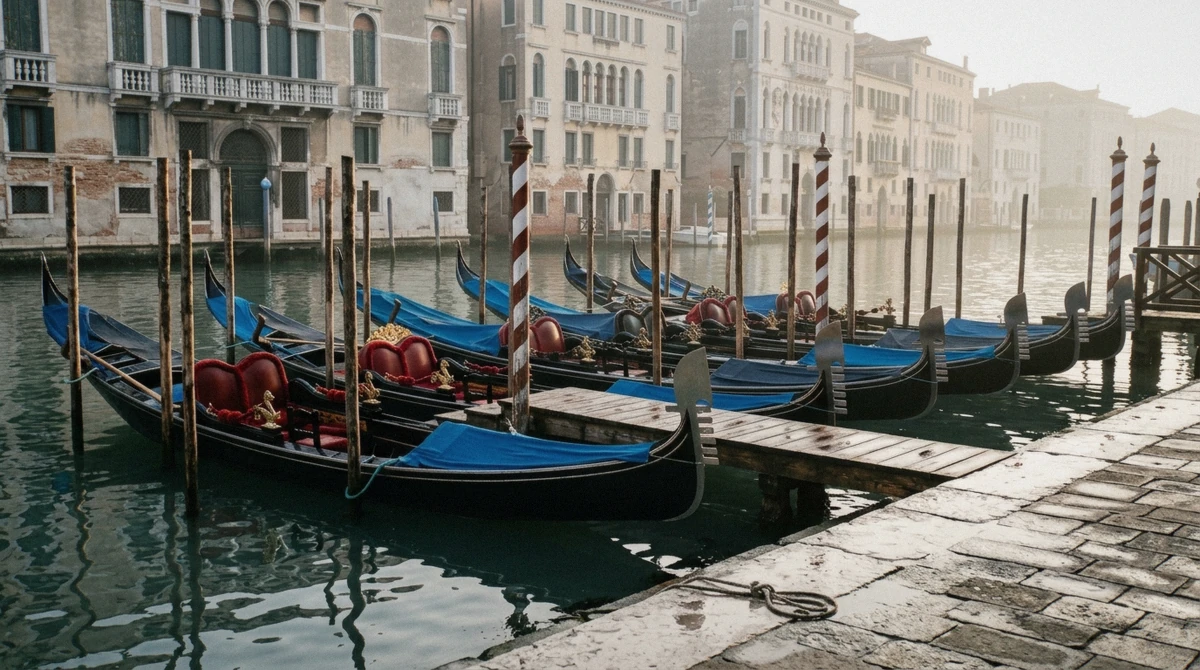
Quick answer Ten licensed moorings, one fare, and the water is the only thing that differs
Venice licenses ten gondola stazi: Danieli, Molo, Dogana, Trinità, Santa Maria del Giglio, San Beneto at the Bacino Orseolo, Carbon, Santa Sofia, San Tomà and San Marcuola. All of them charge the same EUR 90 for thirty minutes in daylight, so there is no cheaper mooring and nothing to shop around for. What changes is the water: Danieli, Molo and Dogana start on open basin, San Tomà and San Marcuola are in narrow canals within a minute. Five of the ten also run the EUR 2 traghetto across the Grand Canal.
Key takeaways
- Same fare everywhere, the tariff table has to be on display at every mooring
- Boarding at San Tomà or San Marcuola skips the open-water crossing entirely
- Bacino Orseolo is the photograph and the queue, both
- Five stazi also run the EUR 2 traghetto; San Samuele and San Marcuola do not
- Booked rides meet where the operator says, compare the eleven listings first
The Ten Stazi, and Where They Put You on the Water
Bubbles grow with the number of compared rides that meet nearby, so a small circle is information: it means the booking platforms mostly ignore that mooring, not that it is closed. Filter by anything, a sestiere, a word in the description, or the name of a ride.
The same ten stations, in text
Coordinates from OpenStreetMap, checked in Q3 2026. Contacts and the list of stazi are published by the Comune di Venezia; the tours shown against each mooring are the compared listings whose meeting point is nearest to it, not a claim about which pontoon the operator uses.
-
Danieli
3 of the toursThe busiest mooring in Venice, on the Riva degli Schiavoni beside the hotel it is named after and two minutes from the Bridge of Sighs. Boats leave straight into open basin traffic before turning into the Rio di Palazzo.
Stops here: Bridge of Sighs, $40, Semi-private, $57, Private romantic, $227
-
Molo
1 of the toursThe waterfront moorings along the Piazzetta San Marco, between the two columns and the Doge's Palace. The most photographed rank of gondolas in the world and the most exposed water any of them start on.
Stops here: Photo shoot, $333
-
Dogana
No tourAt Punta della Dogana, the point where the Grand Canal meets the Giudecca canal under the old customs house. Wide water, long views, and the only stazio where the ride begins with the Salute behind you.
No guided tour stops here. Self-drive only.
-
Trinità
1 of the toursThe Gondola Bauer mooring off Calle Larga XXII Marzo, the wide shopping street running west from Piazza San Marco. It reaches the Grand Canal within a couple of minutes, on the calm stretch below the Giglio.
Stops here: Private boat, $162
-
Santa Maria del Giglio
1 of the toursBeside the church of the same name, on the San Marco bank a little west of the Bauer. It works the middle stretch of the Grand Canal, where the palazzo facades are unbroken and the traffic thins.
Stops here: Prosecco private, $287
-
San Beneto (Bacino Orseolo)
1 of the toursThe enclosed basin directly behind Piazza San Marco where dozens of gondolas moor nose to tail. It is the postcard, and it is also the one place in the city where the queue for a gondola is visible from the bridge above it.
Stops here: Walk + gondola, $31
-
Carbon
No tourOn the Riva del Carbon, the quay just downstream of the Rialto bridge on the San Marco bank. Its traghetto is the shortest-running in the city, weekday mornings only.
No guided tour stops here. Self-drive only.
-
Santa Sofia
No tourOn the Cannaregio bank opposite the Rialto market, beside the Ca' d'Oro. Its traghetto is the one most visitors actually use, because it lands them at the fish market and saves a long walk to the bridge.
No guided tour stops here. Self-drive only.
-
San Tomà
No tourIn San Polo behind the Frari, on the quieter bank of the Grand Canal. Rides from here are in narrow residential canals almost immediately, which is the opposite of the San Marco experience.
No guided tour stops here. Self-drive only.
-
San Marcuola
No tourThe furthest stazio up the Grand Canal, in Cannaregio towards the station. The quietest of the ten and the one nearest to where Venetians actually live; its traghetto crossing is closed.
No guided tour stops here. Self-drive only.
The Three Moorings on Open Water
Danieli, Molo and Dogana sit around the mouth of the Grand Canal, where it opens into the basin of San Marco. They are the moorings everyone finds, and the water is the reason to think twice.
Danieli and Molo
Danieli is on the Riva degli Schiavoni beside the hotel, two minutes east of the Doge's Palace, and it is the busiest stazio in the city. Molo is the rank along the Piazzetta San Marco itself, between the two columns and the water, the most photographed line of gondolas anywhere.
Both put a gondola onto open basin before anything else happens. That water carries constant wash from vaporetti, water taxis and delivery boats, and a gondola sits low in it. It is entirely safe; it is simply not the glassy drift of the photographs, and it is where the first several minutes of a thirty-minute ride go. The compensation is the route: from here the Rio di Palazzo and the Bridge of Sighs are immediate.
Dogana, and the Bacino Orseolo exception
Dogana sits at Punta della Dogana under the old customs house, where the Grand Canal meets the Giudecca canal. It has the widest water and the longest views of the ten, and it is the least crowded of the three.
San Beneto, universally called by the name of its basin, Bacino Orseolo, is the odd one out. It is a hundred metres behind Piazza San Marco but it is an enclosed pool rather than open water, and gondolas leave it directly into narrow canals. It is also where the massed-gondola photograph is taken and where the queue is longest in August. If you want the San Marco convenience without the basin crossing, this is the mooring.
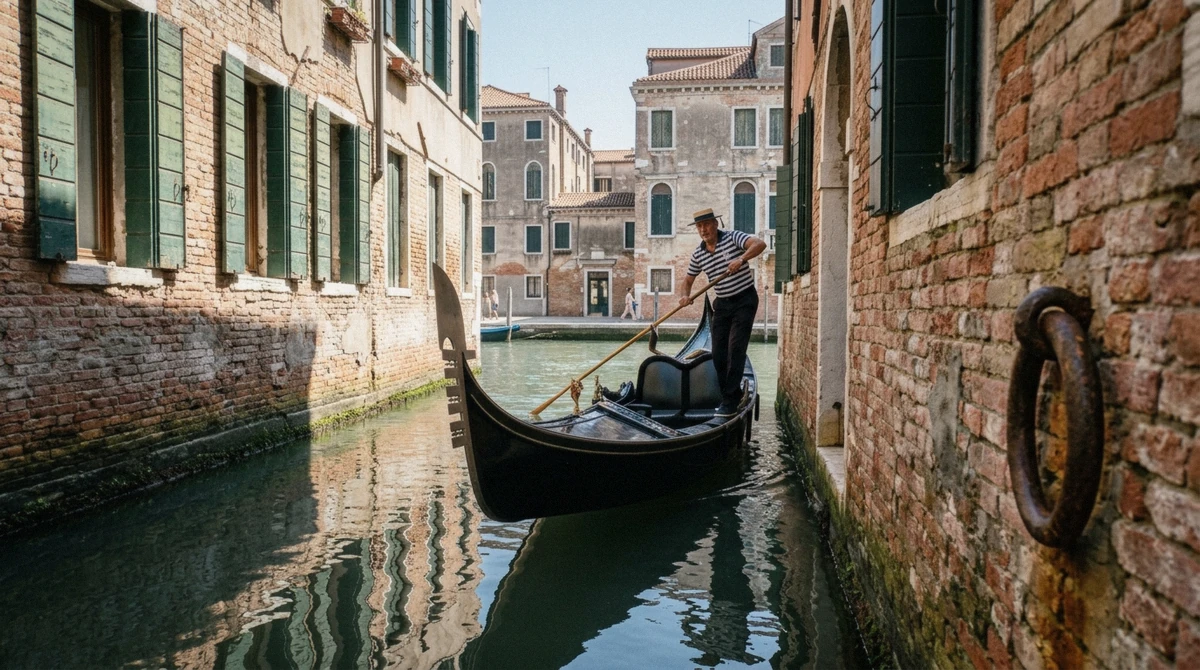
The Moorings That Start in Narrow Canals
Two of the ten put you into residential water within a minute, and they are on the opposite bank from everything a first-time visitor walks to.
San Tomà and San Marcuola
San Tomà is in San Polo behind the Frari, across the Grand Canal from the San Marco crush. San Marcuola is further up in Cannaregio, towards the station, and it is the furthest stazio from Piazza San Marco of the ten.
From either, a gondola is in narrow canals almost immediately: laundry overhead, boats moored to house doors, and no queue waiting to pass under a bridge. They are also the two moorings where you are least likely to find an English-language desk and most likely to be dealing directly with the traghetto association, whose numbers the Comune di Venezia publishes.
| Stazio | Sestiere | What the first minutes are | Traghetto here? |
|---|---|---|---|
| San Tomà | San Polo | Narrow canals within a minute | Yes, 08:30–19:00 weekdays |
| San Marcuola | Cannaregio | Upper Grand Canal and residential rii | No, crossing closed |
| San Beneto (Orseolo) | San Marco | Enclosed basin into narrow canals | No |
| Danieli | Castello | Open basin, then the Rio di Palazzo | No |
| Molo | San Marco | Open basin, the most exposed of the ten | No |
Trinità, Giglio, Carbon and Santa Sofia
The remaining four work the Grand Canal proper. Trinità is the Gondola Bauer mooring off Calle Larga XXII Marzo and reaches the canal in a couple of minutes, it is where the private Grand Canal ride boards. Santa Maria del Giglio is a little further west on the same bank. Carbon is on the Riva del Carbon just downstream of the Rialto, and Santa Sofia faces the Rialto market from the Cannaregio side.
These are the moorings for anyone who actually wants the Grand Canal rather than the side canals. The trade is traffic: this is the city's main waterway and it is busy from mid-morning until the evening.
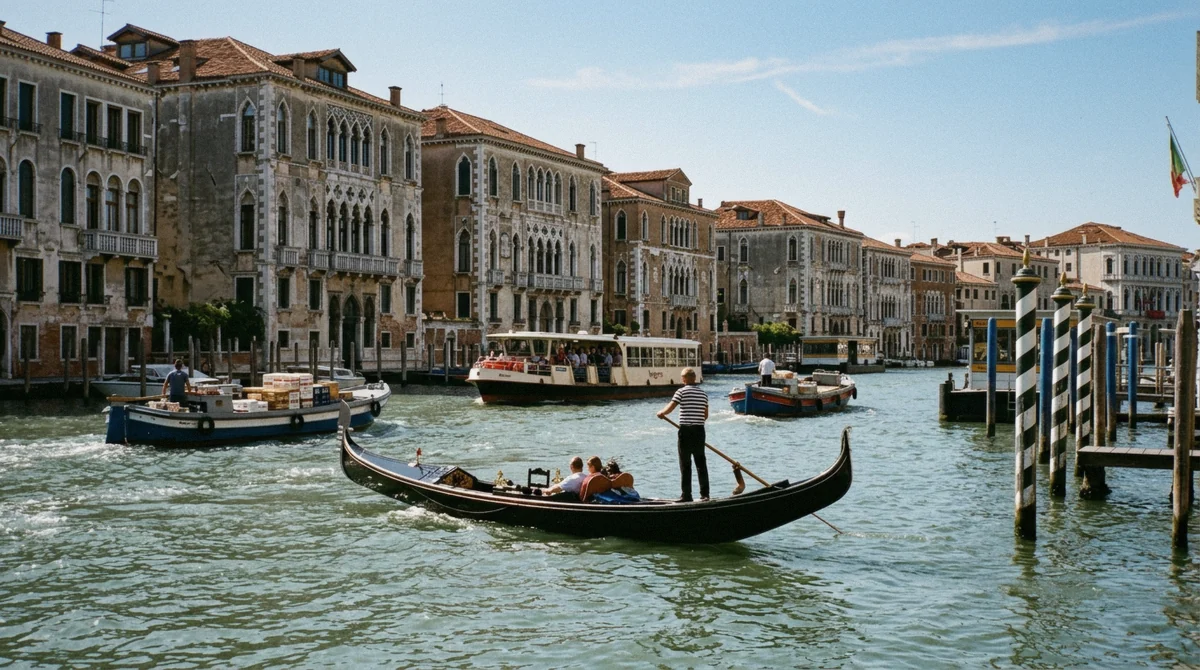
The Five Stazi That Also Run the EUR 2 Crossing
A traghetto da parada is a working gondola, stripped of its upholstery and rowed by two men, that ferries people straight across the Grand Canal where there is no bridge. Only four bridges cross it in the whole city, so the crossings still do a real job.
Fares and hours
the city's traghetto page sets the fare at EUR 2.00 for visitors and EUR 0.70 for residents and IMOB cardholders, and the municipal regulation allows up to twelve passengers standing, against five seated in a gondola on hire. Five crossings still operate; San Samuele and San Marcuola are closed.
There is no service on 15 August, 25 and 26 December or 1 January, and the boats stop at 13:00 on 24 and 31 December.
| Crossing | Weekdays | Weekends and holidays | Lands you at |
|---|---|---|---|
| Santa Sofia | 08:30 to 19:00 | 09:00 to 18:00 | The Rialto market |
| San Tomà | 08:30 to 19:00 | 09:00 to 18:30 | San Polo, by the Frari |
| Dogana | 09:00 to 18:00 | 09:00 to 18:00 | The Salute point |
| Santa Maria del Giglio | 09:00 to 18:00 | 09:00 to 18:00 | San Marco, west end |
| Carbon | 09:00 to 12:00 | Closed | Riva del Carbon, by the Rialto |
What it is not
It is a genuine gondola on the Grand Canal for two euros, and it is not a substitute for a ride. Two minutes, standing, on a short diagonal, with commuters and shopping bags. Anyone selling it to you as a hack has confused a bus with an experience.
What it is genuinely good for is the crossing itself. Santa Sofia lands you at the fish market and saves a fifteen-minute walk to the Rialto bridge and back, which in August is worth considerably more than two euros.
What Every Stazio Owes You
The moorings are not independent businesses setting their own terms. They operate under a municipal regulation with specific obligations, and three of them are worth knowing at the pontoon.
The tariff, on display, in five languages
the municipal regulation requires the current tariff table to be shown at every stazio and every boarding pontile, in five languages, and visibly inside every gondola. Failing to display it is classed as a serious violation against the mooring's officials.
So the check before you board is simply to look for the table. No table is itself the warning. Complaints go to the city's DIME desk under Segnalazioni, or to the Call Center Unico on 041 041, open 08:00 to 18:00. The regulation also lists failure to apply the tariff in force among the conduct a gondolier can be sanctioned for, which means an inflated quote is a breach, and so is the discount some guides advise haggling for.
One oar, or two if you ask
Service is rowed with a single oar as standard. The regulation states that it is performed with two if the passenger requests it, with both gondoliers in matching uniform. It is a different hire at a different price, not a free upgrade, but it is a documented right that almost no visitor knows exists.
After sunset every gondola must carry a white 360-degree light at the bow. The hull, inside and out, must be glossy black and built to traditional measurements, which is why the fleet looks identical from a bridge, and why what is different between boats is all in the brass.
Booked rides meet where the operator says
None of this describes where a booked listing boards. Operators use their own pontoons and desks, and the meeting point is confirmed at checkout, the crafted Bridge of Sighs ride meets on Calle de le Rasse, the semi-private at Campo San Zaccaria, the Prosecco ride at Campo Santo Stefano.
The map above shows which stazio each of those sits nearest to, because that is what decides the water. It is not a claim about which pontoon the operator uses, and where a listing says the meeting point varies, it genuinely varies.
Questions About Gondola Stations
How many gondola stations are there in Venice?
Ten licensed stazi, published by the Comune di Venezia with a contact for each: Danieli, Molo, Dogana, Trinità, Santa Maria del Giglio, San Beneto at the Bacino Orseolo, Carbon, Santa Sofia, San Tomà and San Marcuola.
Is one gondola station cheaper than another?
No. The fare is set by the city and is identical at every mooring, EUR 90 for 30 minutes in daylight, EUR 110 for 35 minutes after 19:00. The full price breakdown is on its own page.
Which gondola station is the quietest?
San Tomà in San Polo and San Marcuola in Cannaregio. Both put a gondola into narrow residential canals within a minute, with no open-water crossing and no queue of boats waiting under a bridge.
Where do you get the best gondola ride in Venice?
It depends what you want from the half hour. For the Bridge of Sighs, board around Danieli. For the Grand Canal, Trinità or Santa Maria del Giglio. For quiet water, San Tomà. The boats and the fare are identical everywhere.
What is a traghetto and where does it run?
A working gondola that crosses the Grand Canal for EUR 2, standing, in about two minutes. Five crossings still operate, Santa Sofia, San Tomà, Dogana, Santa Maria del Giglio and Carbon, and their hours are in the table above.
Can I just turn up at a gondola station?
Yes, all year. In July and August finding a free gondolier at the San Marco moorings can take longer than the ride, which is when a booked slot earns its premium.
What should I check before boarding?
The tariff table, which has to be on display at the mooring in five languages, and the price and duration said out loud. A figure that is not EUR 90 by day or EUR 110 after 19:00 is a reason to walk to the next boat.